

Alfredo Carrillo Obregon and Clark Packard
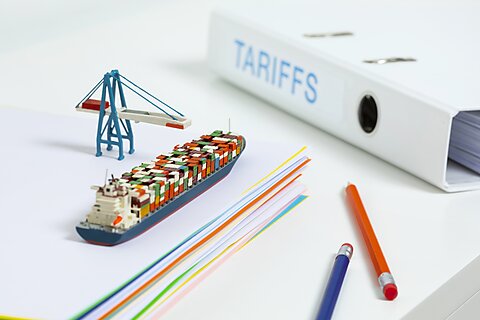
The US government has appealed the Court of International Trade’s May 7 ruling that the 10 percent across-the-board tariffs proclaimed by President Trump under Section 122 of the Trade Act of 1974 are illegal. For reasons we explain in a Cato Briefing Paper released today, this appeal should not succeed in higher courts. More importantly, the president’s justification for invoking this statute—that the deficit in the US trade balance and, more broadly, the US current account amount to “large and serious balance-of-payments [BoP] deficits”—should spur Congress to reform it and thereby reclaim its constitutional authority over tariffs and trade policy.
Section 122 was designed to address a problem that largely arose from the conditions of the Bretton Woods system of fixed exchange rates that existed at the time of the statute’s conception and enactment. As we explain in our new paper:
Under Bretton Woods, the dollar was pegged to gold at $35 per ounce and other major currencies were pegged to the dollar. The United States bore the obligation of standing ready to convert dollars into gold on demand from foreign central banks. A “balance-of-payments deficit” had a precise—and alarming—meaning under the system: Foreign banks were accumulating more dollars than they wished to hold voluntarily and could demand gold in exchange, draining US reserves.
Although the US dollar and other major currencies began to float in 1973, the Bretton Woods system officially ended in 1976–1978. The “classic” BoP problem, therefore, ceased to exist soon after the enactment of Section 122.
Fast-forward 50 years—an interval during which no president invoked Section 122, notwithstanding the growing US trade and current account deficits—and President Trump resorted to the statute in the wake of the Supreme Court’s February 20 ruling invalidating his previous tariffs under the International Emergency Economic Powers Act. But as Section 122’s architecture and legislative history reveal, Congress never intended for the statute to be used as a tool to address mere trade or current account deficits.
Viewed holistically, there is no evidence that the US is experiencing “large and serious” BoP deficits. While the US current account deficit has grown over time, the US investment (i.e., financial account) surplus has also grown, and it continues to offset the deficit in the current account:
The dollar’s reserve currency status means foreign investors willingly hold dollar-denominated assets, providing financial inflows that offset the current account deficit. When investment inflows are included, the US registered a BoP surplus of approximately $96 billion in 2025 (Figure 1).
If courts accept the president’s strained reading of the statute, Section 122 would become a general-purpose mechanism to impose temporary across-the-board tariffs at almost any time. The BoP is an accounting identity that nets to zero, so there will always be components in deficit that Trump, or any future president, could point to and impose tariffs under the statute.
Courts have done their job so far in stopping the president’s attempts to encroach upon Congress’s constitutional authority to impose tariffs and regulate trade. But the onus is on Congress to reclaim this authority wholesale by reforming statutes like Section 122, through which Congress has delegated significant tariff-setting powers to the executive branch. As we conclude in the paper:
US trade policy in 2026 should not be dictated by statutes designed to address problems that arose under conditions from a bygone era, especially if those statutes only contain limited guardrails against executive branch abuse.
Read the full brief here.