







When governments ban products, they don’t eliminate demand—they redirect it. That basic economic fact is especially important in nicotine policy, where people don’t simply stop using nicotine because a preferred product disappears. Flavored vaping bans is a case in point.
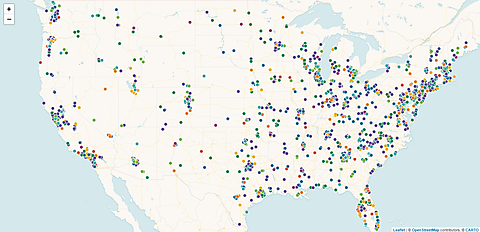
Many states and some cities have enacted bans on in-store and/or online sales of flavored vapes. However, adults also enjoy these flavored products, and many trying to quit smoking find it easier with flavored options.
Researchers Michael Siegel and Amanda Katchmar published a paper in Preventive Medicine in 2022 that drew on longitudinal and econometric evidence and analyses of existing policy outcomes. Their research argues that policies restricting flavored e‑cigarette use could unintentionally increase conventional cigarette use. The paper synthesizes empirical research indicating potential substitution effects, where reducing access to or use of flavored e‑cigarettes might lead some users, especially adults and youth, back to combustible cigarettes.
A quasi-experimental analysis by Friedman et al., published in JAMA Health Forum in December 2024, concluded, “state restrictions on flavored ENDS [electronic nicotine delivery systems] sales were associated with reduced vaping among young adults but may have unintentionally increased cigarette smoking, potentially offsetting public health gains.”
And, in a large study tracking multiple states published in the Journal of the American Medical Association in December 2025, Cheng et al. concluded, “flavor restriction policies were associated with some reductions in e‑cigarette use but also unintended increases in cigarette use.”
Now, Michael Pesko and Abigail Friedman have published the first study outside of the United States that causally links banning flavored e‑cigarettes with higher tobacco cigarette sales. The researchers examined the impact of flavored vaping bans in the Canadian provinces of New Brunswick, Northwest Territories, Nova Scotia, Nunavut, Prince Edward Island, and Quebec. Using retail sales data from 2018–2023, mainly from convenience stores and gas stations, the authors compared trends in provinces that implemented vape flavor bans with those that did not, employing a difference-in-differences approach to identify the policy’s impact. The authors concluded:
[W]e estimate that flavor restrictions increased cigarette sales by 9.6%. In gas and convenience stores, these restrictions nearly eliminated flavored non-menthol and menthol NVP [nicotine vaping products] sales while increasing tobacco and unflavored NVP sales by 123.4%. Substitution patterns arise in Canada despite its strict tobacco control environment, suggesting that patterns of substitution between e‑cigarettes and cigarettes are generalizable across countries with different tobacco regulatory strengths.
Most bans on flavored vaping products aim to reduce youth vaping. However, as I have written before, “public policy toward adult behavior should not be based on minors’ tastes and proclivities.” Moreover, youth vaping has been steadily decreasing, is at an all-time low, and might be a passing fad.
If policymakers want fewer people smoking, they should make lower-risk alternatives easier to use, not harder. Flavor bans do the opposite, pushing some users back toward cigarettes. Youth vaping is already declining and may be a temporary trend. Smoking rates have dropped significantly, but progress depends partly on not undermining safer substitutes.