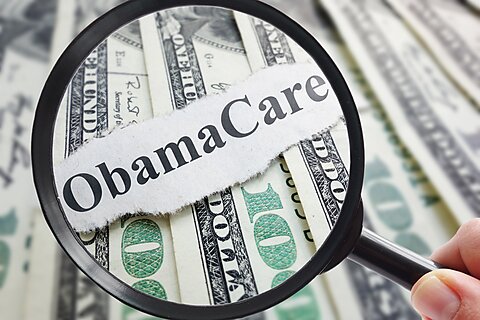





The Government Accountability Office (GAO) has released a report on how careless Obamacare is with your money—for more than a decade, with no improvement.
I don’t … I can’t even … I’ll just quote the report:
The federal Marketplace approved coverage for nearly all of GAO’s fictitious applicants in plan years 2024 and 2025, generally consistent with similar GAO testing in plan years 2014 through 2016.…
Plan year 2024. The federal Marketplace approved subsidized coverage for all four of GAO’s fictitious applicants submitted in October 2024. In total, the Centers for Medicare & Medicaid Services (CMS) paid about $2,350 per month in [premium subsidies] in November and December for these fictitious enrollees. For some, the federal Marketplace requested documentation.… GAO did not provide documentation yet received coverage.
Plan year 2025. Of 20 fictitious applicants, 18 remain actively covered as of September 2025. [Spending on premium subsidies] for these 18 enrollees totals over $10,000 per month.…
GAO’s preliminary analysis of data from tax year 2023 could not identify evidence of reconciliation for over $21 billion in [premium subsidies] for enrollees who provided SSNs [Social Security numbers] to the federal Marketplace for plan year 2023. Unreconciled [premium subsidies] … may include overpayments for enrollees who were not eligible.…
Overused SSNs. GAO’s preliminary analyses identified over 29,000 SSNs in plan year 2023 and nearly 68,000 SSNs in plan year 2024 used to receive more than one year’s worth of insurance coverage with [premium subsidies] in a single plan year. CMS officials explained that the federal Marketplace does not prohibit multiple enrollments per SSN to help ensure that the actual SSN-holder can enroll in insurance coverage in cases of identity theft or data entry errors.
GAO’s preliminary analyses also identified at least 30,000 applications in plan year 2023 and at least 160,000 applications in plan year 2024 that had likely unauthorized changes by agents or brokers. This can result in consumer harm, including loss of access to medications.…
CMS has not updated its fraud risk assessment since 2018 despite changes in the program and its controls. Further, CMS’s 2018 assessment may not fully align with leading practices, like identifying inherent fraud risks. Finally, CMS did not use its 2018 assessment to develop an antifraud strategy.
These are the premium subsidies, by the way, that Democrats want to expand and (some) Republicans want to make more attractive.
This is the government’s typical posture toward health care fraud, and why I wrote yesterday that only the reaction to the Minnesota fraud scandal—not the fraud itself—is remarkable.
And people wonder why US health care is so expensive.