

Thomas A. Berry, Dan Greenberg, and Kimberly Coleman
In 2023, the watchdog journalism organization Media Matters for America reported that ads for at least five major brands had appeared “next to posts that tout Hitler and his Nazi Party on X.” In response, Elon Musk promised to file “a thermonuclear lawsuit against Media Matters.” Mr. Musk’s suits have been unsuccessful, but others soon took up the mantle. First, multiple state attorneys general attempted to issue civil investigative demands (CIDs) against Media Matters, but those efforts were blocked in court.
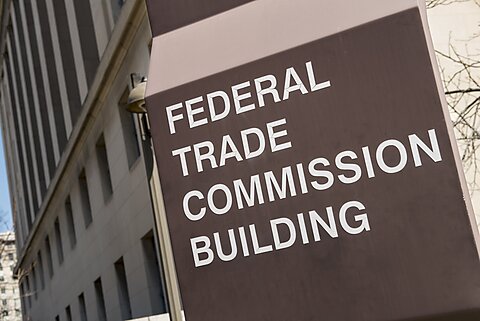
Meanwhile, President Trump appointed a vocal critic of Media Matters, Andrew Ferguson, to be the new chairman of the Federal Trade Commission (FTC). Soon after the state CIDs were blocked, the FTC issued a burdensome CID of its own to Media Matters. The effects of this federal CID on Media Matters have been severe. Media Matters has curtailed reporting, and other organizations have avoided collaborating with it.
Media Matters then sued the FTC, arguing that the CID was issued as retaliation for Media Matters’ speech criticizing Musk and X. A federal district court agreed with Media Matters and preliminarily enjoined the FTC from enforcing the CID. Now the FTC has appealed to the US Court of Appeals for the DC Circuit, which will hear arguments in the case today. And Cato has filed an amicus brief in support of Media Matters.
In our brief, we outline the historical role of the First Amendment and the freedom of the press that it protects. Since the Founding, our courts have advanced press freedoms, and the First Amendment has evolved to protect the people from both explicit after-the-fact punishment for speech and coercive governmental threats of potential punishment for speech. The latter type of violation, known as “jawboning,” can be harder to identify than retaliation but is just as pernicious.
As our brief explains, this case involves not just explicit retaliation (the burdensome CIDs themselves) but also several instances of jawboning. Ferguson and other soon-to-be FTC officials made several statements in the run-up to issuing the CID that threatened not just Media Matters but other watchdog organizations. When Mr. Ferguson was vying to be chairman, he said he had a “track record of standing up to … the radical left” and would “investigate … advertiser boycotts.”
Although jawboning violates the First Amendment, the Supreme Court has not provided a clear framework for lower courts to identify it. In our brief, we argue that the DC Circuit should use Justice Alito’s framework from his dissent in Murthy v. Missouri (2024), which urged that courts should focus on the public officials’ authority, the statements they have made, and the reaction of those who have been jawboned. But even if the court takes a more holistic approach, the result should be the same conclusion: the FTC’s actions are unconstitutional.
Because FTC officials both threatened Media Matters for its speech and then followed through on those threats, the DC Circuit should affirm the lower court’s decision and block enforcement of the CID. When federal agencies attempt to chill speech and dilute the Constitution’s guarantees, the courts should not shy away from stopping them.