


The Maryland legislature—a state whose history of protecting freedom of religion dates to its colonial charter in 1632—is considering a bill that could strip religious liberties from some private schools. The bill, HB 649, would affect all private schools, not just those that receive any public funding, as well as all public schools.
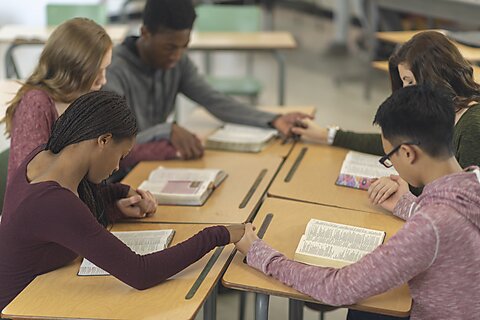
HB 649 could limit how some religious schools uphold their beliefs in policies and student life—for example, defining marriage as being between a man and a woman or not allowing boys to use the girls’ bathrooms and vice versa—if those policies are found to violate the bill’s broad nondiscrimination requirements.
The bill explicitly protects schools “affiliated with a religious institution” but does not define what that means. Depending on how that phrase is interpreted, some religious schools—such as independent Christian, Jewish, or Muslim schools—might not qualify for the exemption.
While courts may ultimately limit or strike down parts of the law on constitutional grounds, that process could take years and significant financial resources. In the meantime, schools could face investigations, lawsuits, and pressure to change policies, creating significant uncertainty about their ability to operate in accordance with their religious beliefs.
Last week, HB 649 passed the Maryland House by a 100–35 vote margin. The Senate Education, Energy, and Environment Committee will hold a hearing on the bill on Wednesday, April 1. This is not an April Fool’s Day prank, but perhaps it’s fitting that a state founded in religious freedom would choose that day to consider such a bill.
In 2022, similar rules were added to private schools that accept public funding, such as Maryland’s small school voucher program. But these provisions remained in the education code under the auspices of the state superintendent. HB 649 goes much further, imposing these rules even on schools that receive no public funding and asserting that they are “an exercise of the police power of the state.”
HB 649 gives the state Commission on Civil Rights (CCR) a new, prominent role in the enforcement of these rules, despite its lack of experience in education. Individuals or the CCR could file civil actions, opening both public and private schools to lawsuits over perceived violations of these rules. But only private schools could be ordered to pay punitive damages, as government agencies are generally immune from such awards.
When I talk or write about school choice policies, such as vouchers or education savings accounts, one of the most common opposition points I hear involves preserving the freedom of private schools or homeschoolers. If parents are allowed to direct some state funding to educational options other than their assigned district school, people fear the state will attach burdensome regulations that will harm the independence of those providers.
As ExcelinEd’s Ben DeGrow and I noted last year, school choice and broader educational freedom often go hand in hand. We focused mostly on homeschooling, but the same is true of any private educational options. Policymakers who want to make it easier for parents to choose from a variety of learning environments aren’t likely to try to stifle those options with burdensome regulations. The ones who want to funnel as many students as possible into a one-size-fits-none system are much more likely to increase regulations on private options.
As more states embrace parental choice in education funding and more families take advantage of learning opportunities beyond their assigned schools, supporters of the monopoly system will continue to fight back. The situation in Maryland is just the latest evidence that supporters of educational freedom must always be vigilant—with or without school choice funding.